
Málaga wine: local grapes, organic wines and what you will actually taste
Go beyond the sweet-wine stereotype. Discover the grapes, styles, landscapes and small producers shaping wine in Málaga today—then choose the experience that lets you understand it your way.
What is Málaga wine?
Málaga wine is not one taste. The province is home to historic sweet and fortified wines, but also dry whites, rosés and reds, small-production organic wines and experimental styles. Moscatel and Pedro Ximénez are central to its past; its present is far wider.
“Málaga wine” can mean different things
The distinction between D.O.P. Málaga and D.O.P. Sierras de Málaga explains why one bottle can be dark, sweet and historic while the next is a fresh dry white or a structured red.
D.O.P. Málaga
The historic denomination is associated mainly with white Pedro Ximénez and Moscatel grapes. It includes naturally sweet wines, wines made from sun-dried grapes, dry wines of at least 15% alcohol and fortified styles that may range from dry to sweet.
- 67 municipalities across five production areas
- Pedro Ximénez and Moscatel at its core
- Sweet, dry and fortified expressions
D.O.P. Sierras de Málaga
This designation protects still wines from across the province: whites, rosés, reds and sweet reds. Its authorised grape list is much broader, which helps explain the diversity of modern Málaga wine.
- Production area across the whole province
- Local and international white and red varieties
- Dry whites, rosés and reds, plus sweet reds
So, is Málaga wine always sweet? No. Sweet Málaga wine is historically important, but the province also produces dry white, rosé and red wines. Ask which style and grape you are about to taste rather than assuming every Málaga bottle is a dessert wine.
Two white grapes shaped Málaga’s reputation
Moscatel and Pedro Ximénez can both produce remarkable concentration, but a grape name is not a flavour guarantee. Location, ripeness, sun-drying, fermentation, fortification and ageing can transform the result.
Modern Sierras de Málaga also authorises a wide range of grapes, including the local red Romé, Doradilla, Moscatel Morisco and many familiar Spanish and international varieties. Not all are equally common or representative; the point is that Málaga’s wine identity is broader than two grapes and one style.
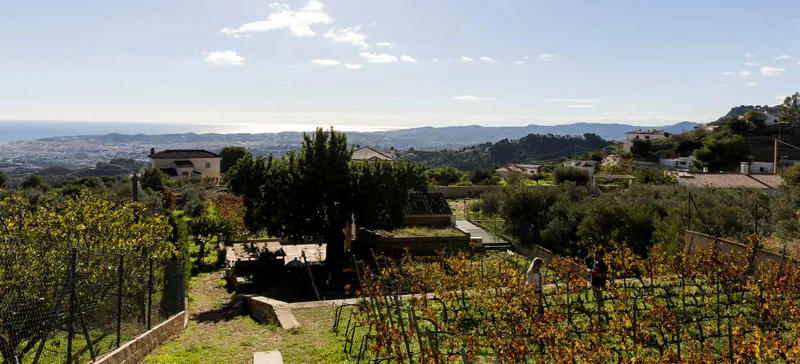
Moscatel de Alejandría
One of Málaga’s emblematic grapes, naturally expressive and often associated with floral, citrus and ripe-fruit aromas. It also connects wine with the province’s protected sun-dried raisins.
Sweetness is a winemaking outcome, not the grape’s only possible identity.
Pedro Ximénez
The other principal grape named by D.O.P. Málaga. It can develop extraordinary richness and dried-fruit depth, especially when grapes become overripe or are dried before pressing.
The final style depends on the method, not the name alone.
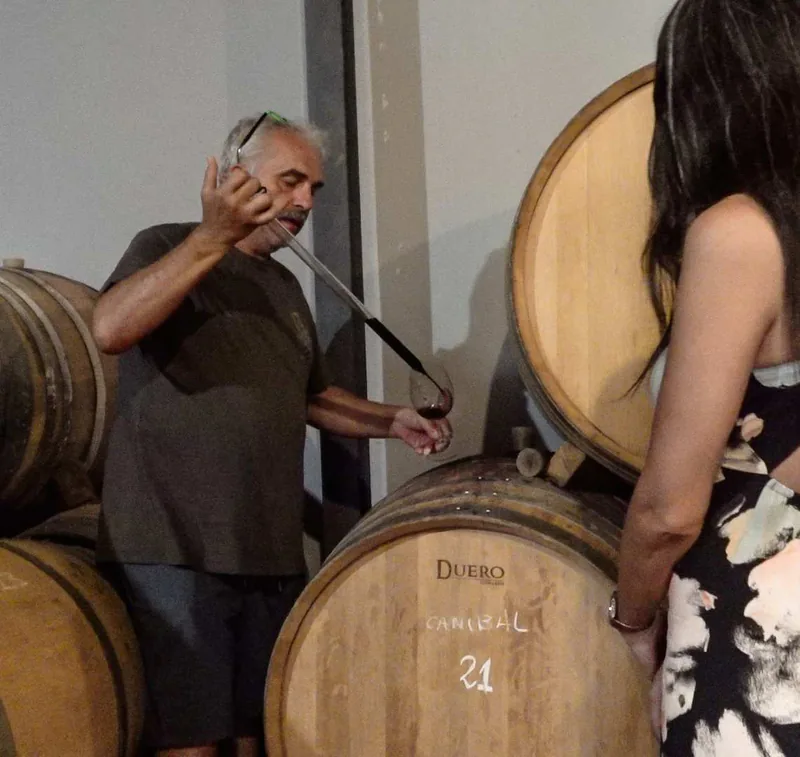
Organic is a way of working—not one flavour
The Mijas experiences offered by White Houses Tours centre on Antonio Mérida’s small-production project. The vineyard is managed without pesticides or other chemical treatments, while the winery follows a minimal-intervention approach and does not add sulphites.
The value for a visitor is being able to connect those claims with a real place: see the vines, compare several wines and ask how growing and winemaking decisions change the glass. On the complete tour, the small winery adds machinery, vessels, experimental wines and production context.
Important: organic does not automatically mean better, “natural,” cloudy or entirely sulphite-free. Sulphites also occur naturally during fermentation. What matters is how the producer works and whether the result is convincing in the glass.
A simple way to taste Málaga wine
You do not need to identify ten aromas or know a scoring system. Five small habits will tell you far more—and make the experience easier to remember.
Look
Colour and brightness already hint at a pale young white, a rosé, a structured red or an amber aged Málaga.
Smell
Think flowers, fresh fruit, dried fruit, herbs, earth or toast. Your memory matters more than the “correct” word.
Balance
Notice sweetness, acidity, alcohol, texture and tannin. Does one dominate, or do they work together?
Add food
Olive oil, cheese, ibérico or a chosen tapa can make the same glass feel brighter, softer or more intense.
Compare
The most useful glass is often the one beside it. Differences become clearer when tasted side by side.
Where to experience Málaga through wine
The exact bottles can change with availability. Choose the format according to the depth, setting and story you want—not simply the number of glasses.
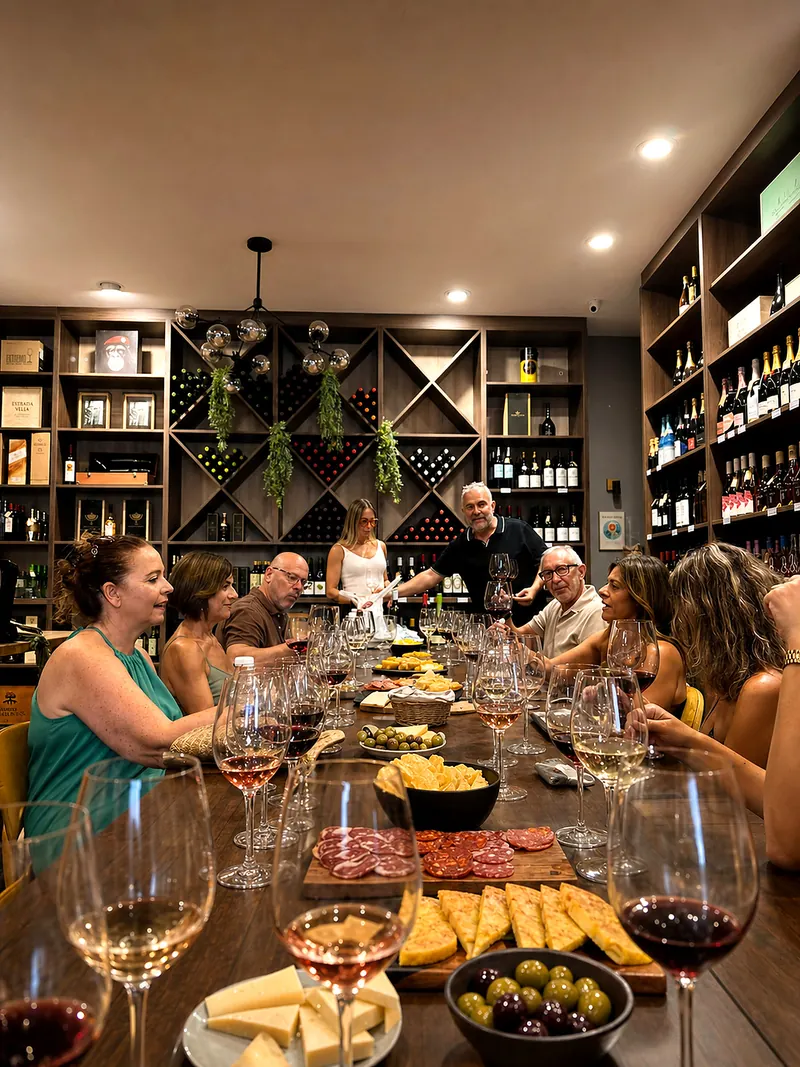
Málaga City Wine Tasting
Five wines, food and a sensory experiment in an easy central setting. The most accessible way to learn through contrast.
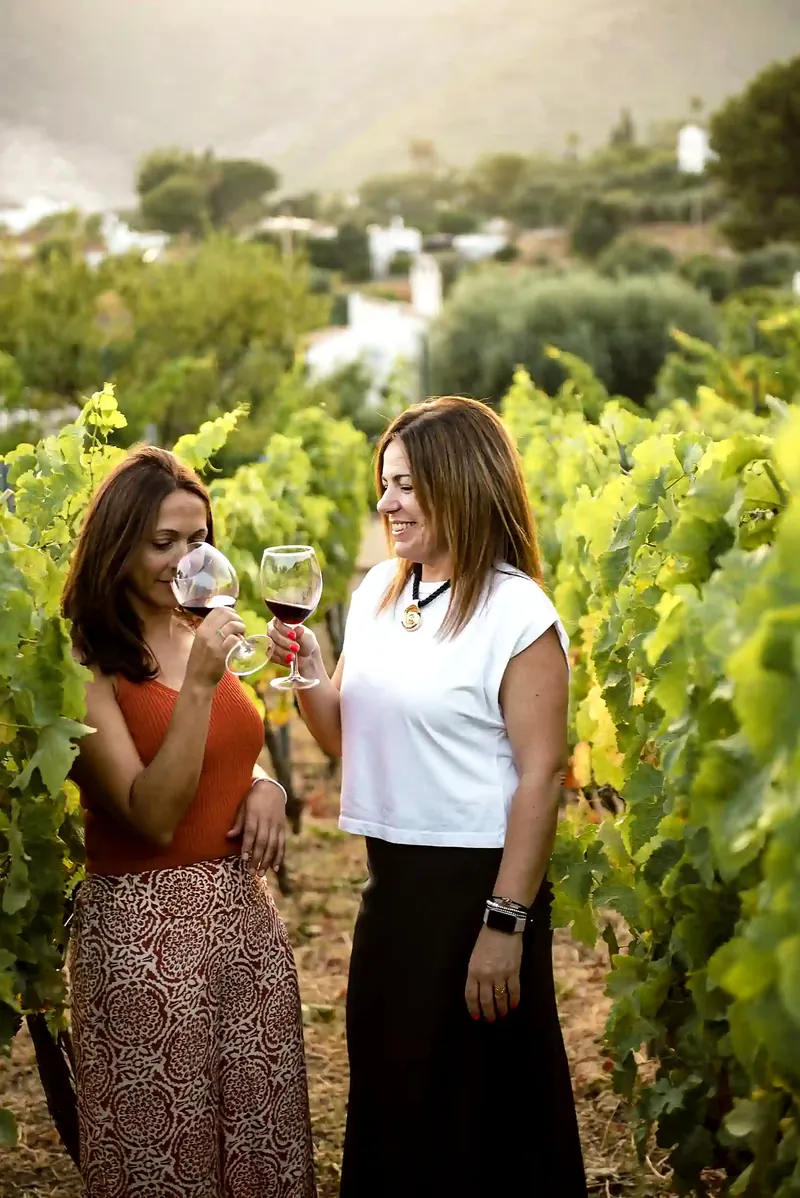
Mijas Vineyard Tasting
Five organic wines, two family olive oils and local tapas at the country house and vineyard. Independent arrival.
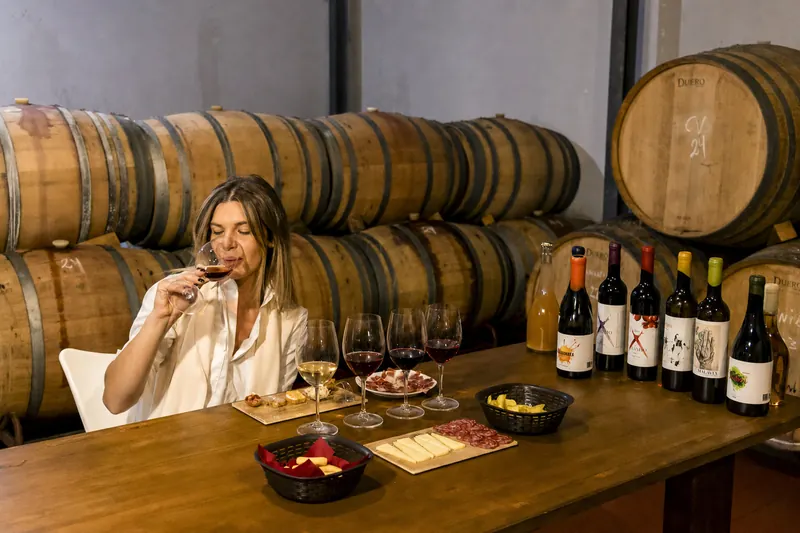
Málaga Wine Tour
Vineyard, small winery, six organic wines, two oils, pairings and return transport from central Málaga. No paella.
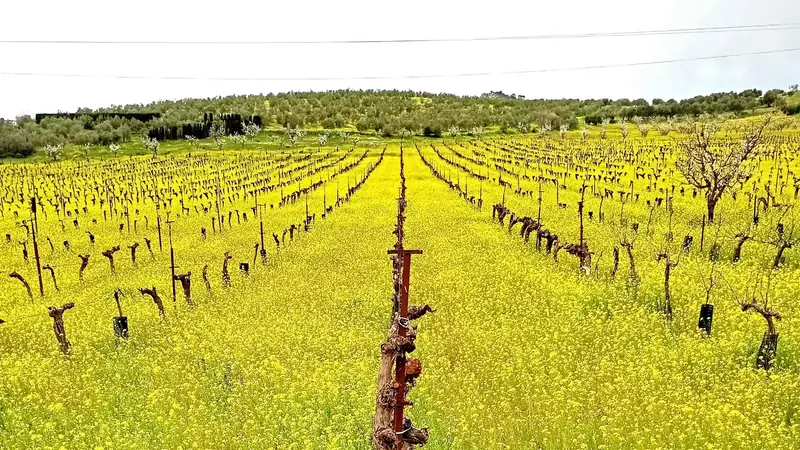
Organic Wine & Olive Oil Tour
Organic fields, a real cooperative, five wines, three olive oils, individual tapas and transport from Málaga.

Full Private Wine Tour
Your own pace, private pickup, vineyard, winery, six wines, two oils, pairings and homemade paella.
Questions about Málaga wine
Clear facts for planning a tasting, vineyard visit or complete wine day.
What wine is Málaga famous for?
Málaga is historically famous for sweet and fortified wines made mainly from Moscatel and Pedro Ximénez. The province also produces dry white, rosé and red wines under D.O.P. Sierras de Málaga and other locally made styles.
Is Málaga wine a dessert wine?
Some Málaga wines are dessert wines, but not all. D.O.P. Málaga includes sweet and fortified styles as well as dry wines, while D.O.P. Sierras de Málaga protects dry whites, rosés and reds alongside sweet red wines.
What are the main grapes of Málaga?
Pedro Ximénez and Moscatel are the principal grapes of historic D.O.P. Málaga. The wider Sierras de Málaga designation authorises many other white and red varieties, including the local Romé.
Can I taste organic wine near Málaga?
Yes. The Mijas vineyard tasting and Málaga Wine Tour feature several organic wines from Antonio Mérida’s small-production project. One remains at the vineyard; the other includes transport from Málaga and continues into the small winery.
Does organic wine contain no sulphites?
Not necessarily. Sulphites also occur naturally during fermentation, and organic rules do not make every bottle sulphite-free. Antonio’s Mijas project is presented as using no added sulphites; this should not be generalised to all organic wines.
Which experiences include transport from Málaga?
The shared Málaga Wine Tour and Organic Olive Oil & Wine Tour include return transport from central Málaga. The Full Private Wine Tour includes private pickup and return for 1–16 guests. The vineyard tasting requires independent arrival, while the city tasting takes place in central Málaga.
Which experience includes paella?
Homemade paella is included in the Full Private Wine Tour. It is not included in the regular shared Málaga Wine Tour. A private vineyard tasting may offer paella as an optional paid addition when confirmed for the group.
Do I need to know about wine before joining?
No. All five experiences are hosted in clear English and welcome questions. The city tasting is the gentlest introduction; the complete shared and private tours provide substantially more production and cultural depth.
Choose how deeply you want to enter the story
A city table, a beautiful vineyard, a small organic winery or a complete rural landscape: the best experience is the one that matches how you want to feel, learn and remember Málaga.
Compare all five experiencesAsk us which one fits
Written by White Houses Tours · Last reviewed 28 August 2026 · Facts checked against the official Málaga wine council and current WHT experience pages.